
KY Legislative Update
Week 10 of Regular Session '26

Welcome to this week’s Legislative Update. Friday was day 46 of the 60 day legislative session. We have two weeks and two days before the veto period begins. Only five bills have passed both chambers - three Senate bills and two House bills. With only 11 days until the veto period, the pressure is on to get bills through both chambers. I’ve heard that we will have long days next week.
Important deadlines are as follows:
April 1st is the last day before the veto period, so any bills for which the Governor’s veto is anticipated must be passed by that day so that a veto override can be considered; otherwise, the Governor’s veto will stand.
April 15th is sine die, the final day of the 2026 legislative session.
BILLS (POSSIBLY) ON THE MOVE
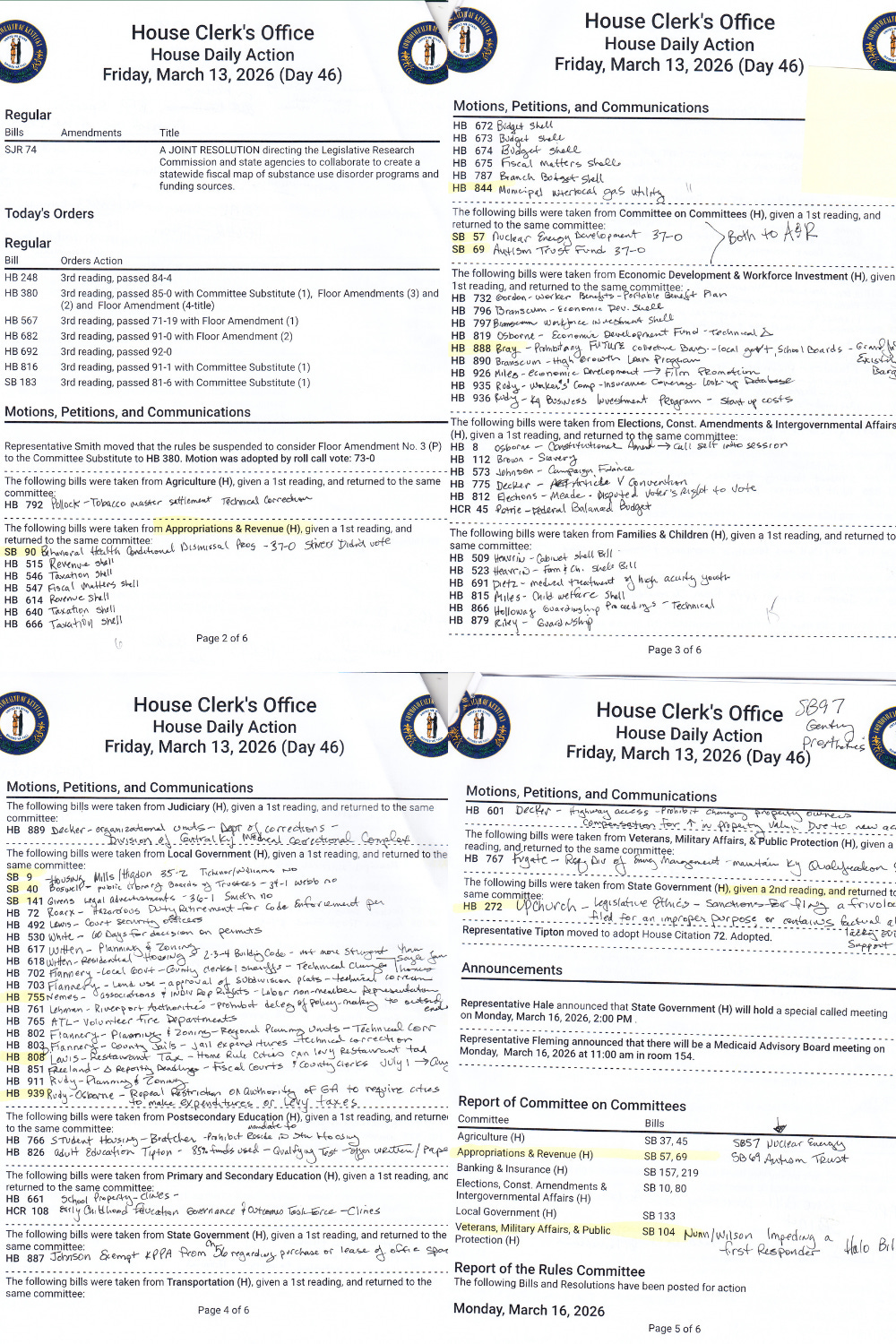
On Friday, the House gave a first reading to 65 bills, 15 of which were shell bills. A shell bill is a legislative vehicle with little or no substantive content, introduced primarily to bypass filing deadlines and later amended with new, often major, legislation.
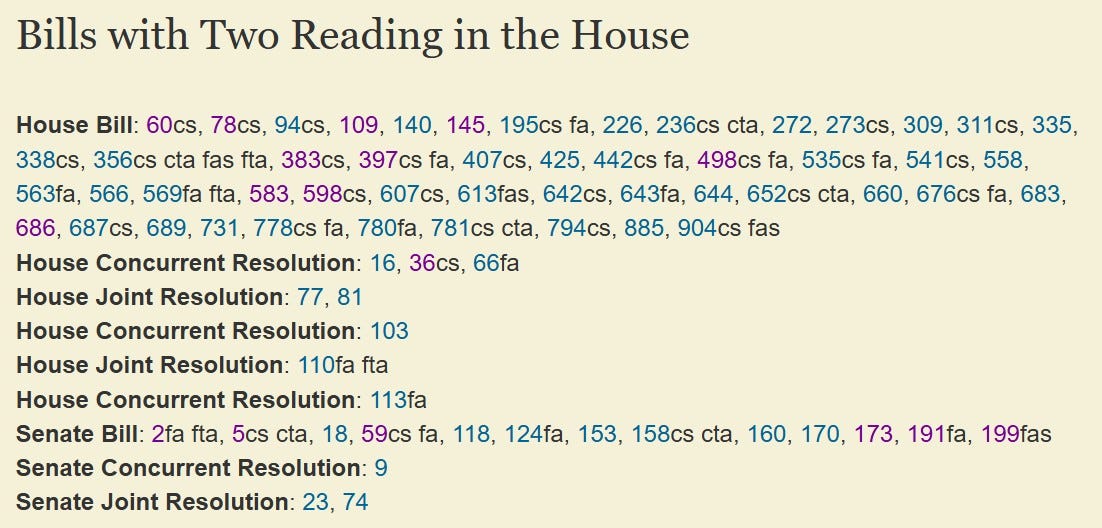
Forty-nine House bills and 13 Senate bills have two readings in the House. A bill having its second reading is often a signal that it is likely to be heard on the floor soon.
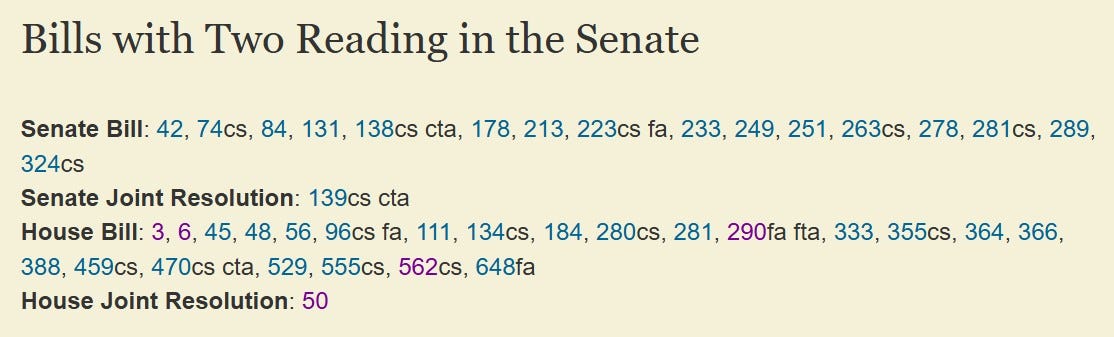
Sixteen Senate bills and 23 House bills have two readings in the Senate.
I am watching the following bills closely:
HB78 (Roberts / Williams) establishes liability protections for manufacturers and sellers of firearms against specified legal actions arising from criminal or unlawful use of firearms or ammunition.
HB888 (Bray) is a bill that prohibits collective bargaining units with either local governments or school boards. It grandfathers in existing collective bargaining units.
SB59 (Rawlings) expands the prohibition on using tax dollars to advocate for or against a public question on the ballot to prohibit using any resources, and to explicitly apply prohibition to school districts, regional educational cooperatives, and recalls on a ballot. This bill limits the ability of school districts to advocate for measures such as Amendment 2 of last year that attempted to change the KY Constitution to allow the use of state money for private schools.
SB104 (Nunn/Wilson) is an act relating to impeding a first responder. Known as the Halo Act in other states, the bill designates a 25-foot buffer zone around first responders and law enforcement. Opponents in other states have argued that the laws could limit First Amendment rights regarding filming police.
SB199 (Howell) establishes that any pesticide registered with the Department of Agriculture, with an EPA approved label for use pursuant to the Federal Insecticide, Fungicide, and Rodenticide Act, is deemed sufficient warning for the purposes of an action concerning duty to warn. According to the KY Resources Council, …
… SB199 bill will prevent farmers, farmworkers, and household consumers from seeking justice when they are exposed to products containing pesticides with an EPA-approved label, but for which the total risk has not been disclosed. SB 199 is not a pro-farmer bill and is intended to shield corporate profit at our communities’ expense.
HB500 (Petrie) EXECUTIVE BRANCH BUDGET
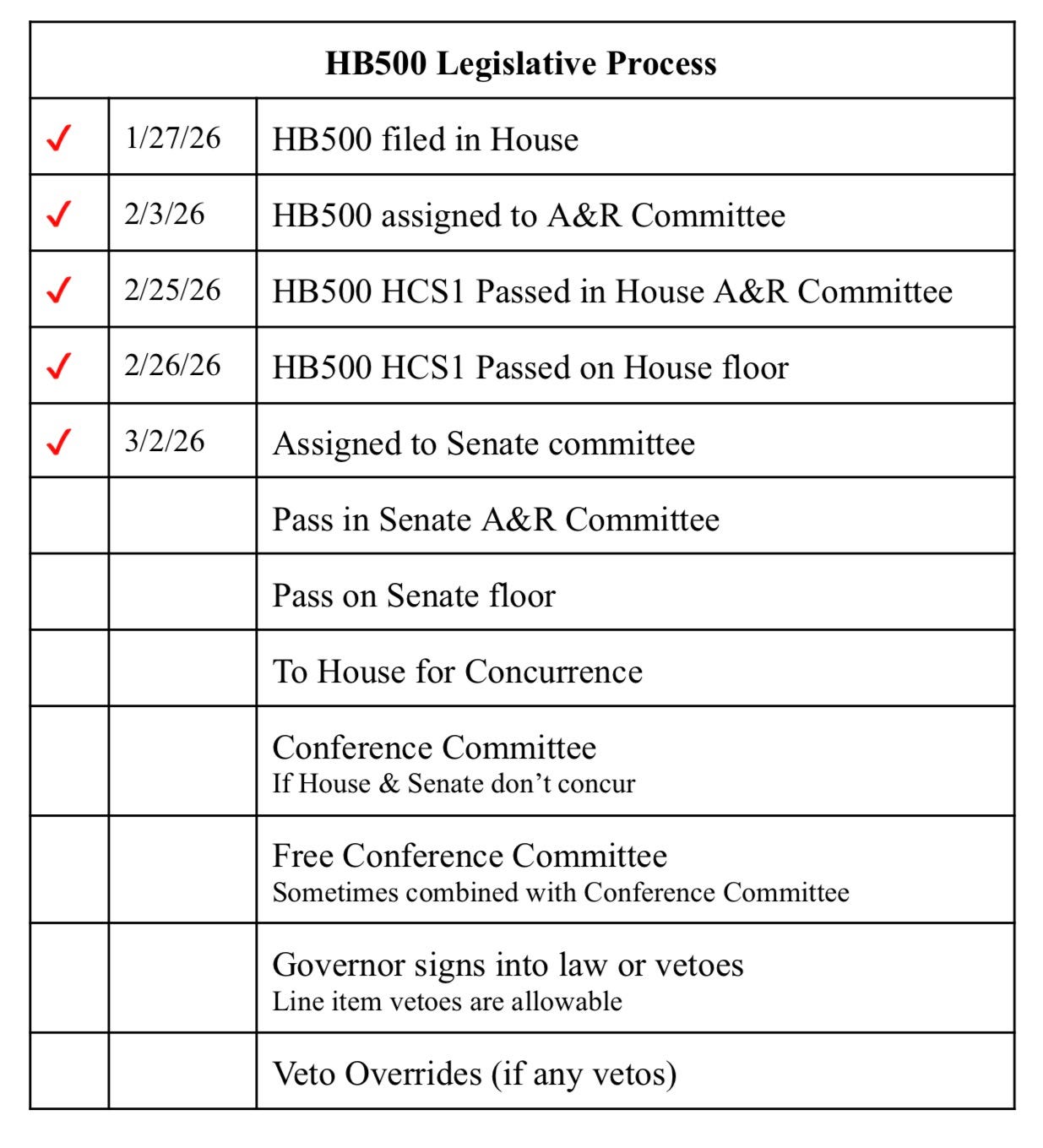
The executive branch budget bill has been assigned to the Senate A&R Committee, but has not yet been heard in the Senate committee. Following is a chart showing where the bill is in the legislative process. The Senate has not yet posted an agenda for the regularly scheduled meeting on Wednesday, March 18th. It is possible that there will be a specially-called meeting once the Senate changes to the budget are drafted.
APPROPRIATIONS & REVENUE COMMITTEE
The A&R committee met on Tuesday and passed twelve bills. Six of the bills were brought to the House floor for a vote on the same day as they passed out of committee. This process limits transparency as we are likely to be voting on a committee substitute that has not yet been available publicly.
HB9 (Petrie) imposes a 4% state retail regulatory license fee on all alcoholic beverage and cannabis-infused beverage sales to consumers by alcoholic beverage retailers. The bill would also sunset existing excise, wholesale, and other taxes on July 1, 2027, as they relate to alcoholic beverages and cannabis-infused beverages. It appears that this bill shifts the tax burden from the alcohol industry to the consumer. The bill was heard on the House floor on the same day that it passed in committee; it passed 63-31. I was a no vote on the bill. Many members from Northern Kentucky voted against the measure.
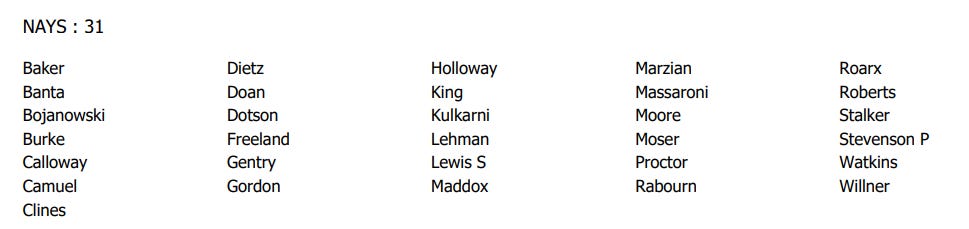
HB356 (Bridges) is in regard to the assessment for property valuation administrators. I voted no in committee based upon feedback from the Jefferson County PVA. The bill has not yet been heard on the House floor.
HB501 (Petrie) is the funding bill for the Transportation Cabinet. The bill was heard on the House floor on the same day that it passed in committee; it passed 90-9. I voted yes for the bill.
HB502 (Petrie) is the biennial highway construction plan. These are road plan projects that are projected to be funded in this biennium. The bill was heard on the House floor on the same day that it passed in committee; it passed 94-5. I voted yes for the bill.
HB619 (Bray) restructures statute regarding the KCTCS system. The bill passed on the House floor the day after committee with a 93-1 vote; Representative McCool voted against the bill.
HB647 (McPherson) amends definitions relating to the GRANT Program (Government Resource Accelerating Needed Transformation Program) to include the US Department of Justice and the US Department of Defense as qualified federal entities. I passed in committee because of a concern regarding the impact of increasing the local match. The bill passed unanimously on the House floor on March 12th. I voted yes because I was not contacted by any agencies regarding my concern about the local match.
HB757 (Petrie) is the revenue bill that is filed annually. I described the bill in detail in last week’s Legislative Update. The bill has a net increase in revenue of $44.6m in FY27 and $46.2m in FY28, primarily due to a delay in the start date for the corporate income tax deferred tax deduction from January 1, 2026, to January 1, 2028. The 345 page bill passed on Wednesday, March 11th. The vote was 69-18 with Representatives Gentry & Lehman joining the Republicans in voting for the measure. I voted no because of the potential impact on the ability of local school districts to raise revenue.
HB816 (Rudy) is the annual claims payment bill. It passed Friday on the House floor 91-1 with the sponsor voting against the measure. His vote did not indicate his concern about the bill, but rather a response to something that had happened many years ago.
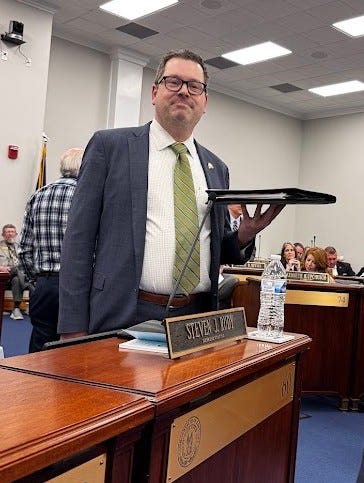
HB869 (Bowling) establishes the rural building and job creation revolving fund. The bill was heard on the House floor on the same day that it passed in committee; it passed unanimously.
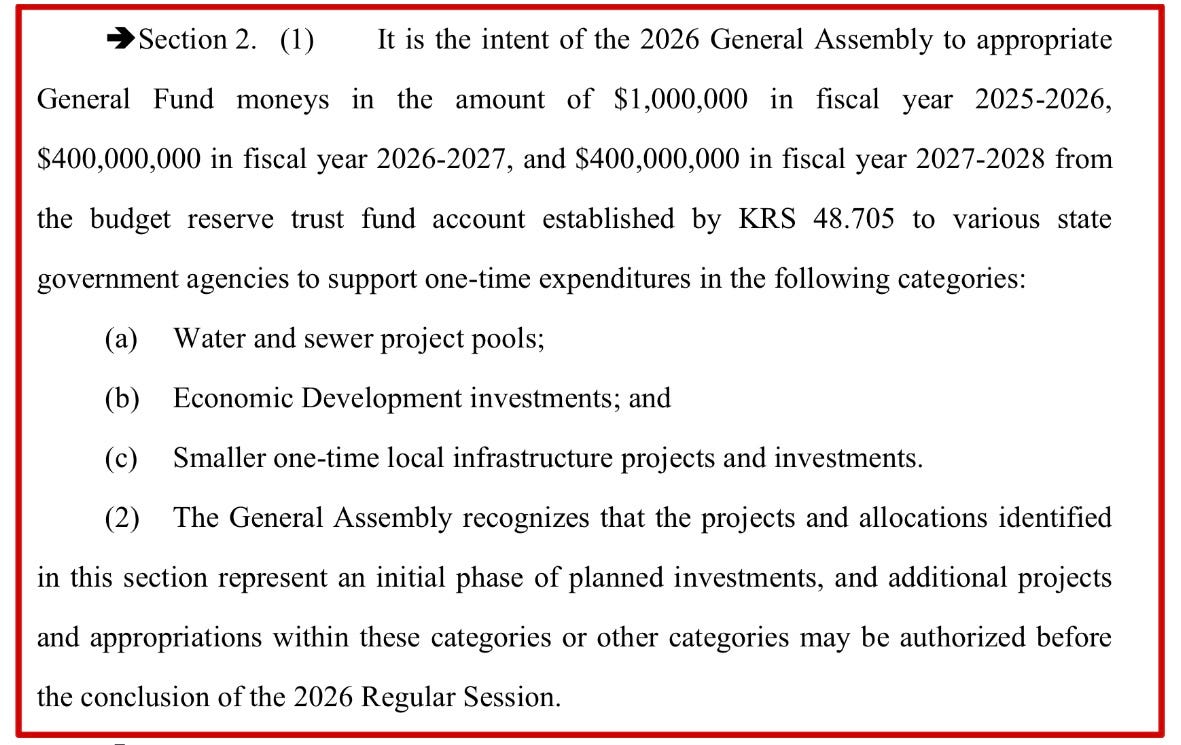
HB900 (Petrie) is an act that appropriates General Fund moneys from the budget reserve trust fund account. The bill appropriates $400 million in one-time funds from the Budget Reserve Trust Fund with minimal details. The committee substitute added a $1m appropriation in FY26 and did not add any additional specifications as to how the money would be appropriated. I voted yes for the bill in committee and on the floor. The bill was heard on the House floor on the same day that it passed in committee; it passed 85-13 with many members concerned about the lack of clarity as to how the appropriation would be spent. I voted yes because despite the lack of clarity, I support spending funds from the Budget Reserve Trust Fund as it currently has a balance of more than $4 billion.
HJR75 is the 2028-2032 highway preconstruction plan. This plan lists projected projects. However, this is not a funding mechanism, so there is no guarantee that any of these projects will be funded in the future. The bill was heard on the House floor on the same day that it passed in committee; it passed 95-4. I voted yes for the bill.
HJR76 is the local assistance road program. This program provides an additional option for cities to secure state funding for road projects. The bill was heard on the House floor on the same day that it passed in committee; it passed 94-5. I voted yes for the bill.
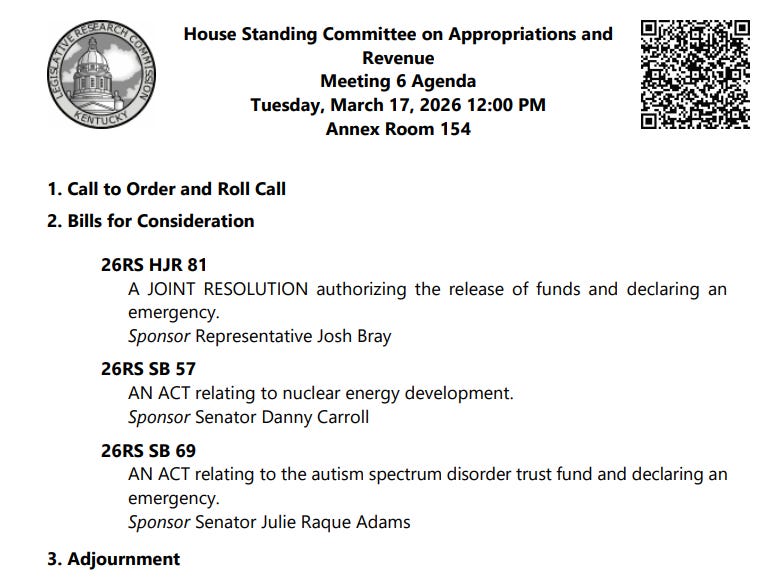
The agenda has been posted for next week’s A&R meeting. Definitely a much lighter agenda!
EDUCATION LEGISLATION
The Primary & Secondary Education committee met on Wednesday and passed three bills. I voted yes for all of the bills.
HB643 (Jackson) allows school districts to implement a wearable panic alert system. We passed this bill last year, but it did not make it through the legislative process. I voted yes.
SB2 (Adams) designates that a school district shall not provide the superintendent or any administrator a percentage pay increase greater than the average percentage pay increase provided to classroom teachers within the district. A committee substitute was prepared for the bill that added language regarding the termination of principals in schools that have been identified for TSI or CSI for two or more years. It went on to say that …
There shall be an irrebuttable presumption of incompetency for a principal of a school that is identified for targeted support and improvement or comprehensive support and improvement for two (2) consecutive years of his or her services as a principal (SB2, PHS1, p. 13).
In an interesting turn of events, the committee sub was not called and the version of SB2 that had passed out of the Senate was passed in committee. However, that afternoon, Rep. Lewis filed a House Floor Amendment to SB2 that replaces the bill with the language from the committee substitute without the “irrebuttable presumption of incompetency” language.
It will be interesting to see which version of the bill passes the House and in turn, whether the Senate will concur with the changes made in the House. The bill is currently in Rules; I’ll be watching for it to be assigned to the Orders of the Day.
SB124 (Nunn) allows school district employees to cash out a certain number of sick days. It also allows educators to use sick leave for observance of religious holidays not otherwise included on the school's calendar. I voted yes for the measure.
FAMILIES & CHILDREN LEGISLATION
The Families & Children committee passed three bills this week. I voted yes for each of the bills.
HB778 (Wilson) was described by the sponsor as an omnibus child welfare bill. It contains language that allows foster kids to remain in care through age 21, even if they have elected to leave the system. It also has language dealing with protection and education around controlled substance child endangerment. Finally, it designates with whom information can be shared regarding students who are in a diversion program. I voted yes for the measure.
SB160 (Carroll) establishes standards and factors for the Cabinet for Health and Family Services to consider in determining whether to issue a plan of correction, directed plan of correction, or suspension or revocation of a child-care license in response to any alleged violation of an administrative regulation by a child-care center. I voted yes for the measure.
SB191 (Carroll) establishes the Kentucky Kindergarten Readiness Performance-Base Child Chare Incentive Pilot Program. The program provides a $2,000 award for parents or child-care providers who have children who meet the to be determined requirements as being kindergarten ready. I voted yes for the bill.
WEEK 10 BILLS PASSED
House Bills. Thirty-four bills passed in the House this week and we passed only one Senate bill. Only five bills have passed both chambers. Either the pace needs to pick up, or it will be a rather austere session. I anticipate that the pace will pick up.
HB621 (Bojanowski), an act relating to class sizes and caseloads for special education students, passed unanimously. My hope is that it will pass the Senate as well.
Most of the bills passed the House with little or no opposition. Following are bills that passed with opposition. Note that the bills that passed out of A&R and on the floor this week are described above.
HB248 (Williams) allows certain hospitals to establish hospital police departments. The bill passed 84-4; I voted for the measure.
HB468 (Elliott) is an act relating to civil rights. The bill modernizes definitions to comply with federal law changes from 2008. Concerns with the bill include the limiting of powers of the local human rights commissions. I am worried that the bill would take away the ability to protect people from housing discrimination. I voted no. The bill passed 72-22 in the House.
HB567 (Flannery) limits open records requests to Kentucky citizens. I voted no because I am against any attempts to limit government transparency. The bill passed 71-19.
HB576 (Duvall) establishes the Kentucky Talent Recruitment Grant Program under the Cabinet for Economic Development. I voted in support of the measure because 25% of the funds shall be used for retention of Kentucky students. The bill passed 83-3.
HB667 (Bauman) is an act relating to solid waste management service companies. The bill expands the definition of “confidential business information” to include publicly contracted solid waste management services and any other proprietary or sensitive business information of a service company or its customers. This information is blocked from disclosure under open records laws. I voted against the bill because of the exclusion of data from a public service agency from the open records law. The bill passed the House 71-23.
SB183 (Nunn) is an act relating to the regulation of proxy advisory services. The bill limits investment decisions based on nonpecuniary interests which include, but are not limited to, an environmental, social, political, or ideological interest. ESG (Environmental, Social, and Governance) investing is a strategy focusing on companies with sustainable, ethical, and well-governed practices, often improving long-term performance and reducing risk. It evaluates factors like carbon emissions, labor standards, and board diversity, rather than just financial metrics. I voted yes for the measure because it does not ban ESG investing; instead, it states that a proxy advisory service is not solely in the interest of shareholders if it subordinates the financial interests of shareholders to other objectives. The bill passed 81-6. SB183 was the only Senate bill to pass through the House last week.
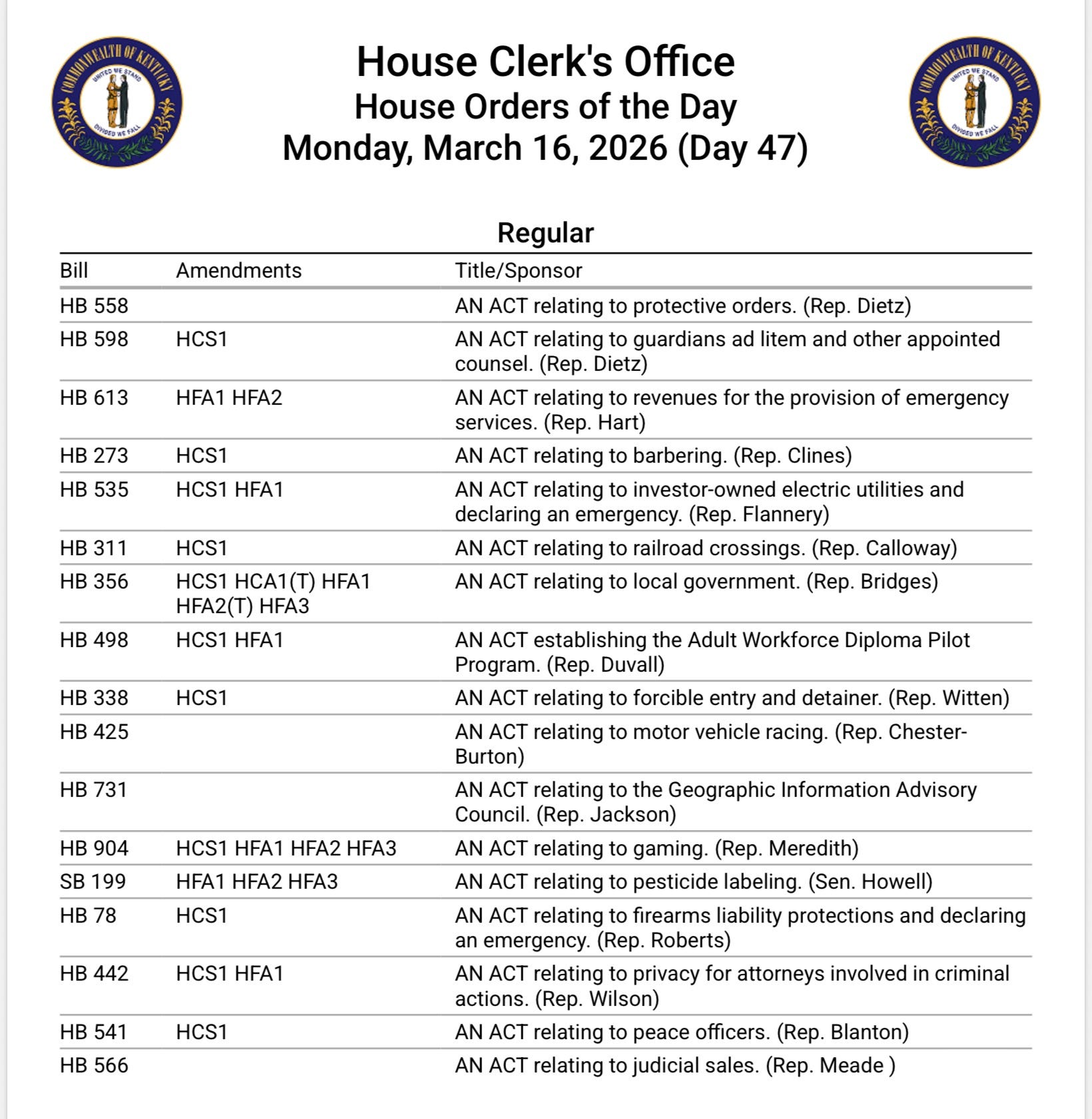
There are 17 bills on the House Orders of the Day for Monday, March 16th. These are bills that are eligible to be heard on the House floor according to the chamber rules. However, it is possible that the chamber will vote to suspend the rules to hear other bills - such as bills that pass out of committee on the same day. Buckle up buttercup, it is going to be a busy week.
Senate Bills. The Senate passed 34 bills this week. Four bills passed with significant opposition. The Senate did not pass any House bills.
SB41 (Boswell) is an act relating to the levy of an ad valorem tax rate. The bill subjects any ad valorem tax rate which will produce revenue from real property of more than 4% over the amount of revenue produced by the compensating tax rate to be subject to recall by placing a question on the ballot before the voters of the taxing district. The bill limits the ability of local elected officials to raise revenue for municipal needs without a public vote. The bill passed 26-9 with Senators Givens, Howell, and Webb joining the Democrats in voting against the bill.
SB65 (West) nullifies an administrative regulation relating to the Medicaid outpatient pharmacy program as well as two emergency administrative regulations of the Department of Alcoholic Beverage Control relating to tobacco, nicotine, or vapor product licenses. Each of these regulations was found deficient during this legislative session. The bill passed 26-6 with all Democrats voting against the measure.
SB224 (Mills) is an act relating to land use. The bill passed 27-10 with Senators Funke Frommeyer, Rawlings, Tichenor, and Storm joining the Democrats in voting against the measure.
SB262 (Stivers) proposes an amendment to Section 256 of the Constitution of Kentucky relating to the submission of constitutional amendments to voters. The bill states that a summary can be on the ballot instead of the full text of the amendment. The bill passed 32-6, with all Democrats voting against the measure.
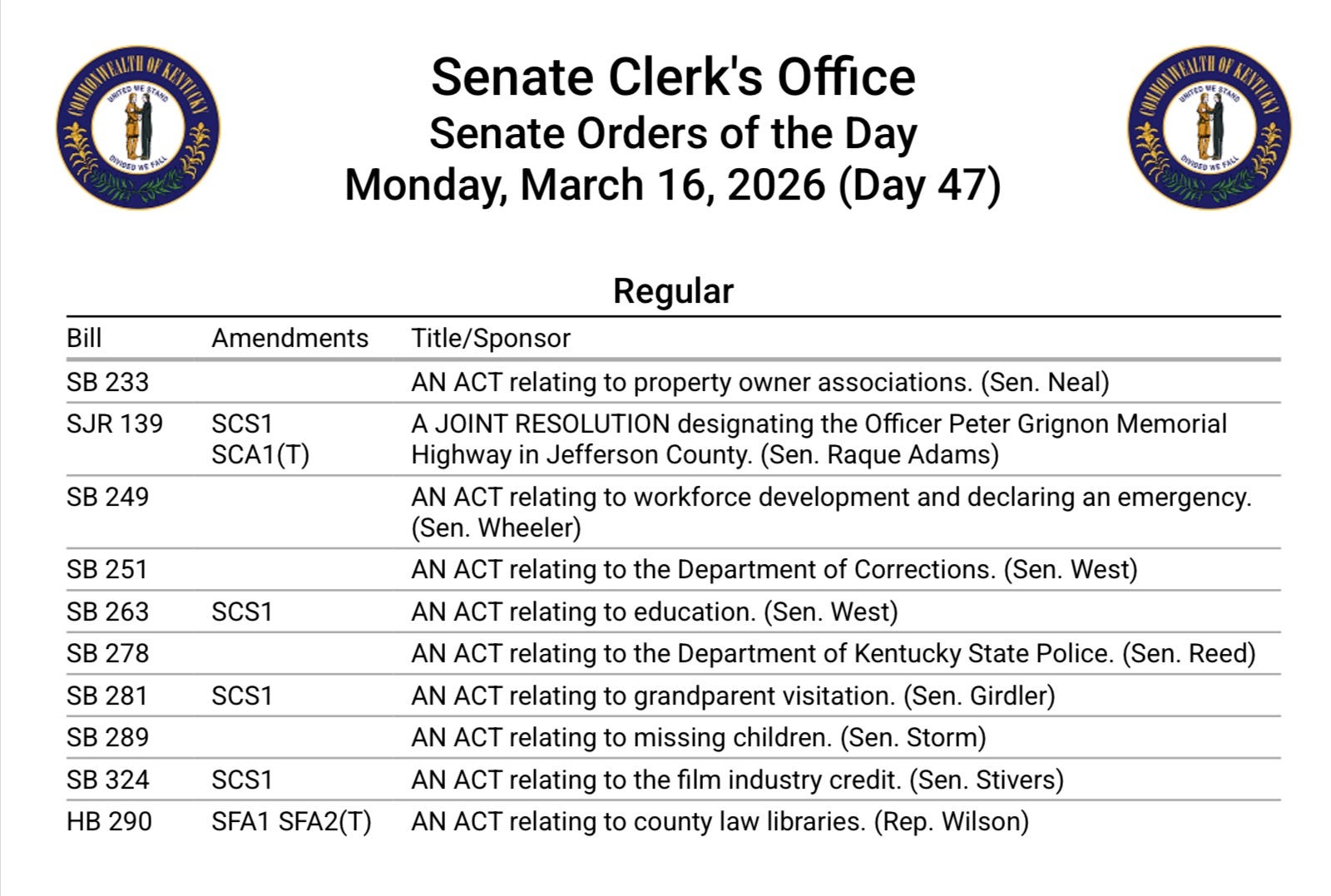
There are 10 bills on the Senate Orders of the Day for Monday, March 16th.
GUBERNATORIAL VETOES
Governor Beshear has vetoed HB1, the bill that opts Kentucky into the federal education opportunity program. I anticipate a veto override early next week. You can read the full veto message here.
Throughout our history, Kentuckians have been firm that public dollars should only be used for public education. In fact, our Kentucky Constitution has a specific provision that requires “voter approval" for such dollars to be used elsewhere. In 2024, our General Assembly followed the required process, asking the people of Kentucky if they wanted to spend public dollars on private or charter schools. The answer was a resounding no. The effort was defeated by 30 points! That was the same margin of victory as Donald Trump in Kentucky. It was rejected in all 120 counties, both rural and urban, by significant margins. The message was clear. Don't divert public dollars. Fund our public schools. (Gov. Beshear veto message for HB1, 3/13/26).
VETO OVERRIDES
Not surprisingly, the veto on HB314, an act relating to the Kentucky Communications Network Authority, was overridden. The bill has been delivered to the Secretary of State and will become law.
WAIT … WHAT? Legislation that is bizarre, offensive, or otherwise notable.
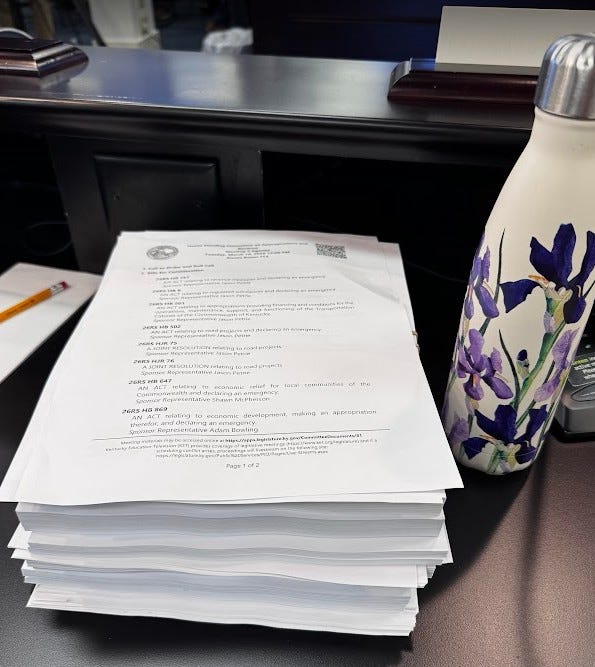
On Friday, 65 bills were given a first reading. A bill must have three readings and pass on the House floor to pass out of the chamber. I looked up each bill as posted below. (Sorry for the angled scan.) It will be interesting to track the bills to see which ones move in the next 11 days - particularly the budget shell bills.
VISITORS
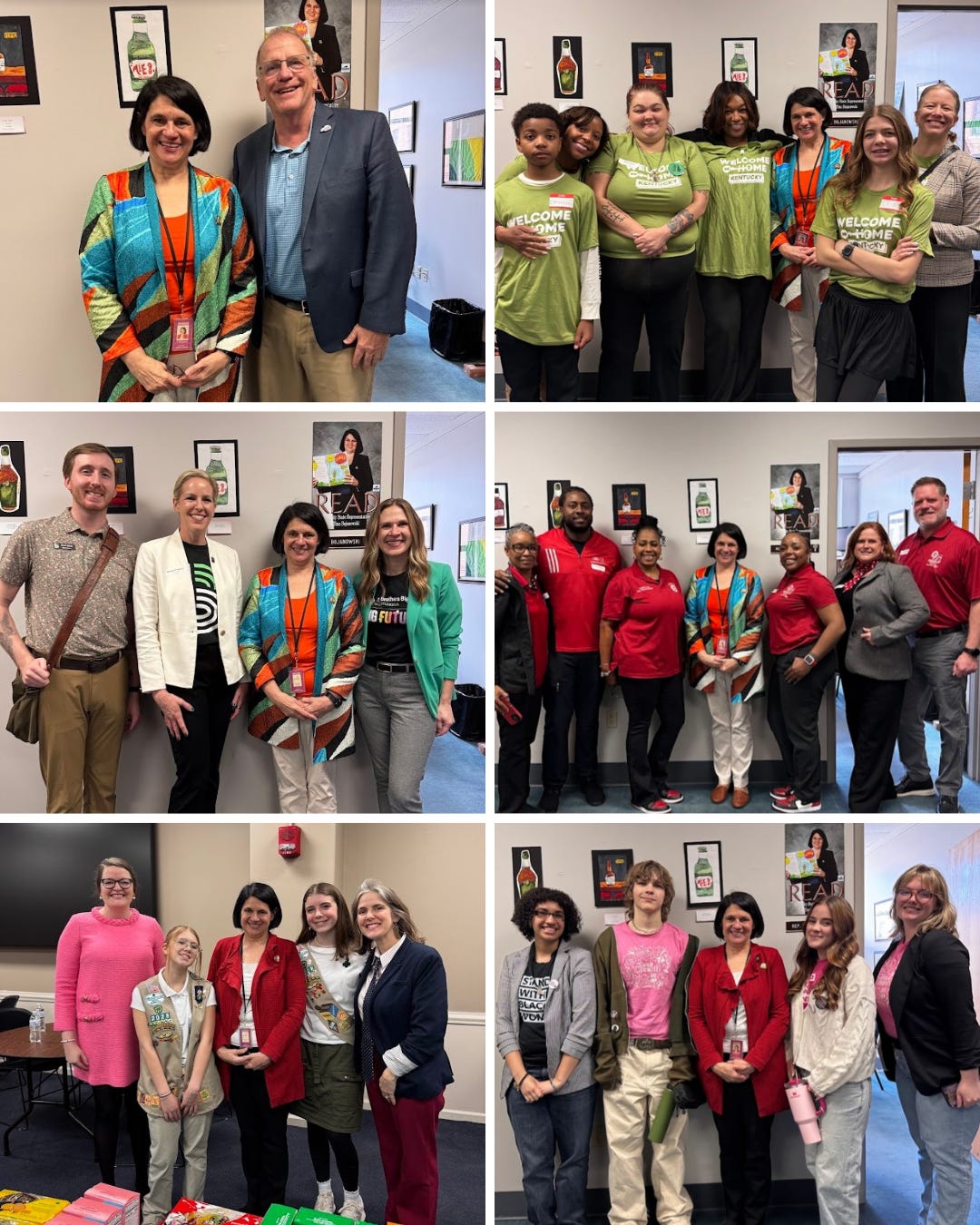
Much of my day while we are in session is filled with visits from advocates for various causes. While visits have tapered off a bit as we near the end of the session, I still had some great meetings.
CARPOOL CHAT
On Friday morning, Rep. Stalker, Rep. Roarx, and I once again recorded a conversation about our week. We often carpool from Louisville to Frankfort, which gives us ample time to reflect on legislation, trade perspectives about the session, catch up on life beyond the General Assembly, and—most importantly—share a good laugh.
FAIRNESS DINNER
On Saturday, Sarah Stalker and I attended the Fairness Dinner at the Muhammad Ali Center. Such a fun time!

ON A PERSONAL NOTE
This week I read The True True Story of Raja the Gullible (and His Mother). The book is a tragicomic love story set in Lebanon - a modern saga of family, memory, and the unbreakable attachment of a son and his mother. It was a lovely book.
This week I streamed the hilarious show Jury Duty. Laughter is truly therapeutic.

I continue to enjoy my daffodils. I cannot wait for spring break so that I can get out into my garden. I’m hoping that they will survive the upcoming storms and anticipated freeze.

Thank you for reading and I’ll see you next week.
Tina Bojanowski